

The formation process of diamond is closely related to key parameters such as pressure, temperature, and synthesis time.1. Pressure Determines the number and size of crystal grains: Within the diamond phase region, the number and size of diamond crystal grains are primarily determined by pressure. As pressure increases, the number of diamond crystal grains rapidly increases, and their particle size also becomes larger. Affects nucleation and conversion rate: When pressure is low or temperature is high, the critical radius for diamond crystal grains is larger, making nucleation difficult and resulting in a low conversion rate. Conversely, when pressure is high or temperature is low, the critical radius is smaller, crystal grains form easily, are numerous and dense, and the conversion rate is high. Role in secondary pressurization: Secondary pressurization experiments showed that when the oil pressure increase amplitude is small (e.g., from 67MPa to 69MPa, an amplitude of 3%), the number of crystal grains basically does not increase. However, when the pressure increase amplitude is larger (e.g., from 67MPa to 71MPa, an amplitude of 7%), the number of crystal grains significantly increases. If the pressure increase amplitude is too large (exceeding 12%), even with high heating power, the number of crystal grains remains high, and their color turns black. Impact on crystal grain size: Whether in primary or secondary pressurization, crystal grain size changes significantly only within the first few minutes after the pressure stabilizes (about 6 minutes); even if the synthesis time is extended afterwards, the increase in grain size is not obvious. Used for controlling crystal grain quality: When the pressure increase amplitude is small, the increase in crystal grains is minimal, thus allowing control over the number and quality of crystal grains, providing a possible way to grow high-quality coarse-grained diamonds.2. Temperature Determines the color of diamond: The color of diamond is largely related to temperature. Yellow diamonds are typically distributed in higher temperature regions. When the second heating power is high, the resulting crystal grains are yellower. Affects the number and size of crystal grains: At the same pressure, when the temperature increases from low to high, the number and size of crystal grains will change from zero to a maximum, and then decrease again until no diamond appears. Affects nucleation and conversion rate: When temperature is high or pressure is low, nucleation is difficult, and the conversion rate is low. Choosing growth temperature: Although at lower temperatures the conversion rate is low and nucleation is sparse, impurities are not easily excluded from the crystal. Therefore, it is more appropriate to choose to grow diamonds at higher temperatures to control the growth rate, which can yield high-quality crystal grains grown in the so-called diamond "optimal crystal region". Combined effect with pressurization: When the second heating power (W2') is high, even if the pressure increase amplitude is large, the increase in the number of crystal grains is not significant, and the crystal grains are yellower. If only pressure is increased without increasing power, the resulting crystal grains will be black and mostly clustered.3. Synthesis Time Affects crystal grain size: Crystal grain size changes significantly only within the first few minutes after the pressure stabilizes (about 6 minutes); even if the synthesis time is extended afterwards, the increase in grain size is not obvious. Potential impact: The sources indicate that extending synthesis time may contribute to the synthesis of high-quality large-grained diamonds.In addition to the above main parameters, the research also involves the following factors:Catalyst: The study used Ni~oMn2sCos catalyst. The catalyst promotes the rapid formation of diamond crystal grains by distorting the graphite lattice through electron attraction. After diamond formation, the crystal grains are surrounded by the catalyst melt, and their continued growth depends on the diffusion and deposition of carbon atoms or atomic groups.Synthesis Method and Materials: The direct-heating static pressure catalyst method was adopted. Specific experimental methods included sheet-layered direct-heating assembly. Measures such as graphite pretreatment, improved sample assembly, or the use of new catalysts have also been explored to increase diamond grain size.Pressurization Process: Experiments were conducted using two processes: primary pressurization and secondary pressurization. By selecting pressure and temperature conditions, segmenting pressure and temperature increases, and strictly controlling the amplitude, high-quality coarse-grained diamonds can be obtained in a relatively short time.Diamond Formation Region: Diamond only forms within specific pressure and temperature ranges. The left boundary of this region is parallel to the catalyst melting curve, and the lower boundary is parallel to the graphite-diamond phase equilibrium curve.In summary, given specific materials such as graphite, catalyst, and pressure-transmitting medium, pressure and temperature are the decisive factors in the formation and growth process of diamond. A deep understanding of their relationships, roles, and mechanisms will be crucial for guiding research and production practices for growing high-quality large-grained diamonds.
read more+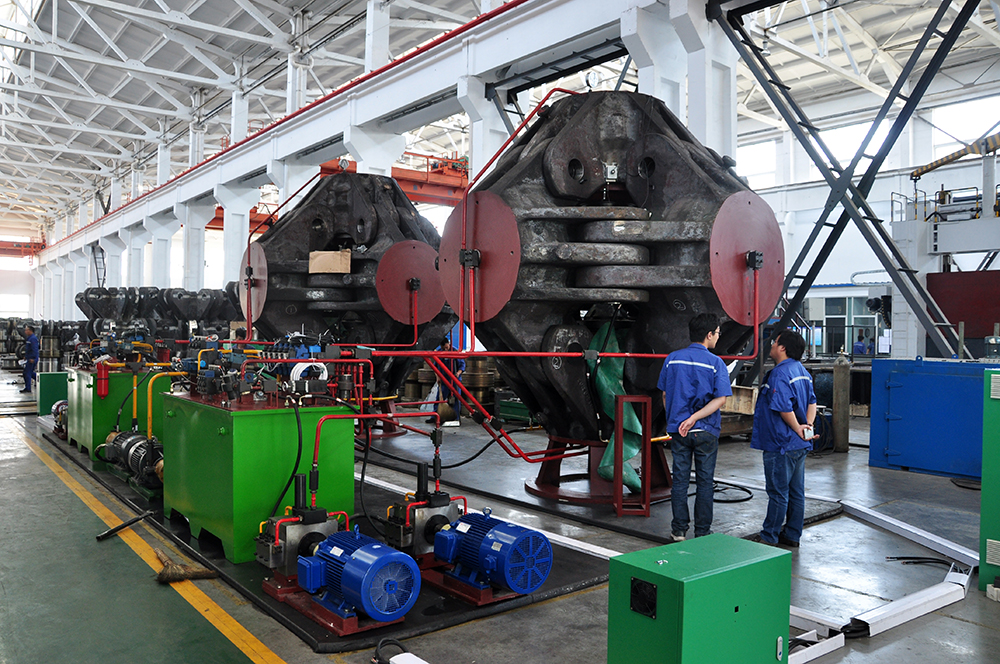
The main repair steps for the HPHT Hydraulic Cubic Press are as follows:1. Problem Analysis and Repair Strategy Formulation: First, it is necessary to analyze the causes of press failure, such as the phenomenon of all 32-M24 connecting screws of the piston being pulled off. This could be due to the piston's segmented structure, O-ring seal failure allowing hydraulic oil to enter the contact surfaces, loose screws, and poor coaxiality between the upper and lower cylinder sections. To address these issues, the repair strategy involves welding the upper and lower cylinder sections together to prevent hydraulic oil ingress, improve coaxiality, and increase connecting force. It is necessary to consider that welding thermal deformation can lead to increased geometric tolerance, thus machining of the piston's upper cylinder section and the guide sleeve is required after welding to ensure their fit tolerance and geometric tolerance. The piston material is 40Cr quenched and tempered steel, which has poor weldability. Special attention must be paid to issues such as cracks, embrittlement, and softening in the heat-affected zone.2. Alignment: On a vertical lathe, the upper and lower cylinder sections are aligned using the lower cylinder section as a reference. They are pressed evenly with short pressure plates in sections to ensure that the coaxiality of the piston's upper and lower cylinder sections is less than or equal to 0.03mm.3. Welding Process: Based on the company's welding equipment, the characteristics of various welding methods, and the welder's technical status, shielded metal arc welding is selected. First, the root of the welding groove is spot-welded symmetrically to fix it, which reduces deformation after welding. Then, the welding groove is filled using a multi-layer welding method. During welding, two people must operate symmetrically, maintaining consistent current, speed, and electrode thickness, and keeping the temperature of the welding area constant. Different types of electrodes are selected for layered welding. For example, E6016—D1 electrodes are used for the first and second layers, E8515—G electrodes for the third and fourth layers, and E4303 electrodes for the cover layer. Strict control of welding parameters is required, including electrode diameter, welding current, and welding polarity. Strict welding precautions must be followed: electrodes must be baked before welding, workpieces must be cleaned of impurities, and short-arc, narrow-pass welding should be used. When welding in the quenched and tempered state, in addition to preventing cracks, the embrittlement and softening of the heat-affected zone must be considered. Welding methods with concentrated heat and high energy density can reduce the degree and range of softening. The weld seam must be thoroughly cleaned to remove pores, spatter, weld beads, and slag, thereby clearing both slag and some stress. Preheating is performed, with the preheating temperature and interpass temperature controlled between 200~250℃. Smaller heat input should be chosen to reduce softening and embrittlement in the heat-affected zone. Post-weld tempering treatment should be performed immediately. The tempering temperature should avoid the steel's temper brittleness range and be controlled to be 50℃ lower than the original tempering temperature of the base metal, held for 2.5 hours, then naturally cooled to room temperature with the furnace. This also serves as hydrogen removal. The part is then left to stand for 48 hours to relieve stress. After welding, the welding zone is inspected with ultrasonic testing to ensure it meets requirements.4. Alignment and Machining: On a horizontal or vertical lathe, alignment is performed using the lower cylinder section as a reference. The welded area is leveled by turning, and then the outer circle of the upper cylinder section is machined, controlling the surface roughness to Ra≤1.6μm. The upper end face of the upper cylinder section is also machined, achieving a surface roughness of Ra≤1.6μm.5. Matching and Machining of Guide Sleeve Inner Hole: The upper end of the guide sleeve's inner hole is machined to create a stepped hole. A wear ring made of QT500—7 material is fitted into the stepped hole with an interference fit (interference amount of 0.2 ± 0.02mm) and hot-fitted. After hot fitting, alignment is performed using the outer diameter of the guide sleeve that mates with the working cylinder as a reference. Using the machined outer diameter of the upper cylinder section as the actual dimension, the inner hole of the wear ring is machined to form an H7/g6 fit with the upper cylinder section's outer diameter. Finally, a pressure ring is pressed on, and 32 screws are installed to enhance the connecting force, concluding all repair work.These steps collectively ensure that after repair, the piston's operational resistance is reduced, its coaxiality is improved, and the return pressure is significantly lowered, allowing the equipment to operate stably for many years.
read more+
The sulfur additive in powder catalysts affects synthetic diamonds in the following detailed ways:Changes in Catalyst Characteristics and Impact on Growth Process Sulfur, as a trace element additive, is incorporated into powder catalysts (such as Fe-Ni catalysts). This additive can significantly alter the characteristics of the catalyst, thereby influencing its catalytic action to a certain extent. This, in turn, changes the growth conditions, mechanism, and process of diamond, ultimately affecting various properties of the diamond, including its morphology, color, strength, and internal inclusion distribution.Impact on Diamond Morphology Overall Crystal Shape: When synthesized using Fe-Ni catalysts with sulfur additive in a domestic cubic anvil high-pressure apparatus, most diamond crystals are cubo-octahedral and possess a complete crystal shape. Appearance of Etch Pits on Faces: This is one of the most significant morphological features of diamonds synthesized with sulfur-containing catalysts. Etch pits typically appear on the faces of most diamond crystals synthesized with sulfur-added Fe-Ni catalysts, a phenomenon absent in diamonds synthesized without the sulfur additive. Both optical microscopy and electron microscopy observations confirm this. These etch pits usually manifest as many irregular indentations aggregated in a specific area. Integrity of Faces: In contrast, the faces of diamond crystals containing the sulfur additive are relatively complete.impact on Diamond Growth Mechanism Disruption of Crystal Lattice Arrangement: The appearance of etch pits indicates that the addition of sulfur elements disrupts the lattice arrangement of the {100} crystal faces during diamond growth. Selective Adsorption Effect: Research speculates that this disruption and the etch pit phenomenon are caused by the selective adsorption of sulfur or sulfides on the faces of the diamond. The influence of impurities on crystal growth morphology is often due to the selective adsorption of impurities on crystal faces, and this adsorption alters the relative growth rates of the crystal faces, thereby contributing to changes in crystal morphology.Impact on Diamond Internal Structure and Properties Significantly Reduced Inclusion Content: The inclusion content in diamond crystals synthesized with sulfur-added Fe-Ni catalysts is remarkably lower than that in diamonds synthesized without the sulfur additive. Inhibition of Inclusion Entry: Optical microscopy observations reveal that this phenomenon suggests that the addition of an appropriate amount of sulfur plays a certain inhibitory role in the entry of inclusions during diamond growth. Diamond Color Change: Due to the difference in internal inclusion content, diamonds synthesized with sulfur-added catalysts appear light yellow, while those synthesized without the sulfur additive exhibit a dark yellow color. Control of Inclusion Distribution: Overall, adding an appropriate amount of sulfur to the mixed system of Fe-Ni catalyst and graphite helps control the content of inclusions in diamond.
read more+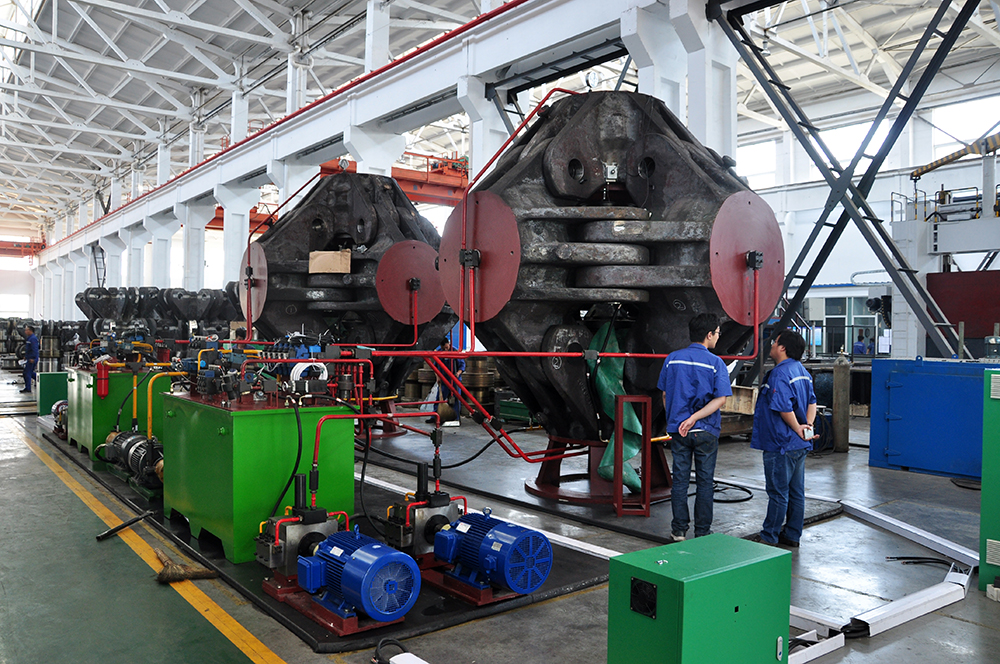
Regarding the hydraulic control modes of the HPHT Hydraulic Cubic Press, the sources provide a detailed analysis and discussion. With the widespread application of large-tonnage cubic hydraulic presses and large-cavity synthesis processes like 38mm and 40mm, the state of the pressure and temperature fields within the synthesis cavity has changed. Therefore, optimizing control modes, especially pressure control modes, has become a crucial task for diamond manufacturers and equipment suppliers.Below are the main hydraulic (pressure) control modes for the HPHT Hydraulic Cubic Press:Ideal Pressure Control ModeTo reduce the increased pressure gradient caused by pressure loss and phase change in large-cavity processes, and to meet the stable pressure conditions required for the growth of high-quality single-crystal diamonds, an ideal pressure control mode should have the following characteristics: Controllable pressure increase curve: This allows for coordination with the heating curve to improve pressure transmission effects and reduce the generation of pressure gradients. Gradually increasing pressure curve during the holding stage: This helps reduce the increased pressure gradient caused by the deterioration of pressure transmission performance due to pyrophyllite phase change. Controllable pressure release speed: To accommodate different requirements for pressure release speed at high and low pressures.Currently Applied Pressure Control ModesThe sources introduce several pressure control modes currently in use:1. Traditional Pressure Control Mode Characteristics: In this mode, pressure fluctuations are significant, representing a crude control method. Applicability: It is not suitable for large-cavity synthesis processes.2. Variable Frequency Pressure Holding Control Mode Characteristics: This mode maintains constant pressure during the holding stage. Drawback: It neglects to compensate for the pressure gradient caused by synthesis phase changes.3. Passive Incremental Pressure Supplement Mode Principle: This mode supplements pressure by a set increment after the holding pressure drops to a certain set value. Nature: This is a passive pressure supplementation mode. Drawback: In reality, the number of pressure supplements during the holding stage of the press is limited and related to the failure of the high-pressure seal of the press. Therefore, this mode does not truly achieve the goal of compensating for the pressure gradient through incremental pressure supplementation.4. Active Incremental Pressure Holding Mode Principle: This mode achieves incremental pressure supplementation by setting pressure increments and time intervals (i.e., number of pressure supplements). Nature: This is an active incremental pressure supplementation mode. Optimization: Using a variable frequency pressure holding method can minimize the pressure drop within each set time interval, although typically, press pressure-holding performance is good, and this pressure drop can be ignored. Importance: Possessing active incremental pressure holding functionality is one of the important features for a cubic hydraulic press to effectively reduce pressure gradients and provide pressure conditions suitable for the growth of high-quality single-crystal diamonds in large cavities.5. Pressure Control Mode Using Proportional Valves Principle: Proportional valves control the thrust and displacement of electromagnets continuously and proportionally by controlling current or voltage according to a set curve, thereby achieving control over system pressure and flow. Advantages: Pressure holding stage: It can achieve continuous incremental system pressure during the pressure holding stage. Pressure increase stage: It can achieve continuously controllable pressure increase speed during the pressure increase stage. Pressure release stage: Through program-controlled pressure release actions, the pressure release speed is controllable. Full-process control: Therefore, this mode achieves full-process curve control of pressure. Assessment: The pressure control mode using proportional valves is considered the closest to the ideal control mode currently possible and is a relatively ideal hydraulic control system.In summary, to provide pressure conditions suitable for the growth of high-quality single-crystal diamonds in large cavities, the cubic hydraulic press should at least possess active incremental pressure holding functionality to effectively reduce pressure gradients. Among these, the pressure control mode using proportional valves is a relatively ideal hydraulic control system. Additionally, the large-cavity synthesis process requires a synthesis tonnage of at least 1800T to meet its pressure conditions.
read more+
Powder catalyst, as one of the raw materials for synthesizing diamonds, significantly impacts the overall quality and yield of synthetic diamonds. It can be said that powder catalyst is the catalyst for diamond synthesis, and its characteristics directly affect the yield and quality of diamonds.The key characteristics of powder catalyst influence the yield and quality of synthetic diamonds in the following aspects:Oxygen Content As the oxygen content of the powder catalyst continuously increases, the single-batch yield (i.e., production quantity) will gradually decrease. The color of the synthesized single crystal will also gradually turn grayish. Its particle size and peak value will gradually decrease. During the manufacturing process, powder catalysts have a relatively large surface area, making them prone to adsorbing oxygen or moisture, thereby increasing their reaction potential. When some substances react, they produce corresponding oxides. These oxides are difficult to remove and cannot effectively facilitate carbon dissolution and catalytic action during the synthesis process, thus damaging the stability of synthesized diamonds and significantly affecting their quality.Nickel (Ni) Content As the Ni content of the powder catalyst increases, the metal will possess a certain electronic or geometric structure under catalytic action. Generally, under relatively high-temperature conditions, elemental Ni and carbon do not easily form stable compounds. Cobalt (Co) achieves a relatively moderate condition for carbon solubility. The fewer electrons it exhibits, the stronger its carbon-dissolving ability. If the iron content relatively increases, the growth rate of diamond single crystals will increase. Differences in the nickel content of the powder catalyst will affect the quality of synthesized diamonds.Particle Size (Granularity) If the particle size of the powder catalyst is coarse and unevenly distributed, it will lead to a lack of overall uniformity when mixed with graphite powder. This will prevent the "diamond film" from providing a relatively stable state for the synthesized single crystal, thereby affecting the quality of the synthesized diamond. To produce higher quality synthetic diamonds, the "diamond film" must ensure its thickness and physical properties remain unchanged during the synthesis process.In summary, the oxygen content, nickel content, and particle size of the powder catalyst all have a certain impact on the subsequent yield and quality of synthesized diamonds. Therefore, in production, close attention must be paid to the control of these three factors.
read more+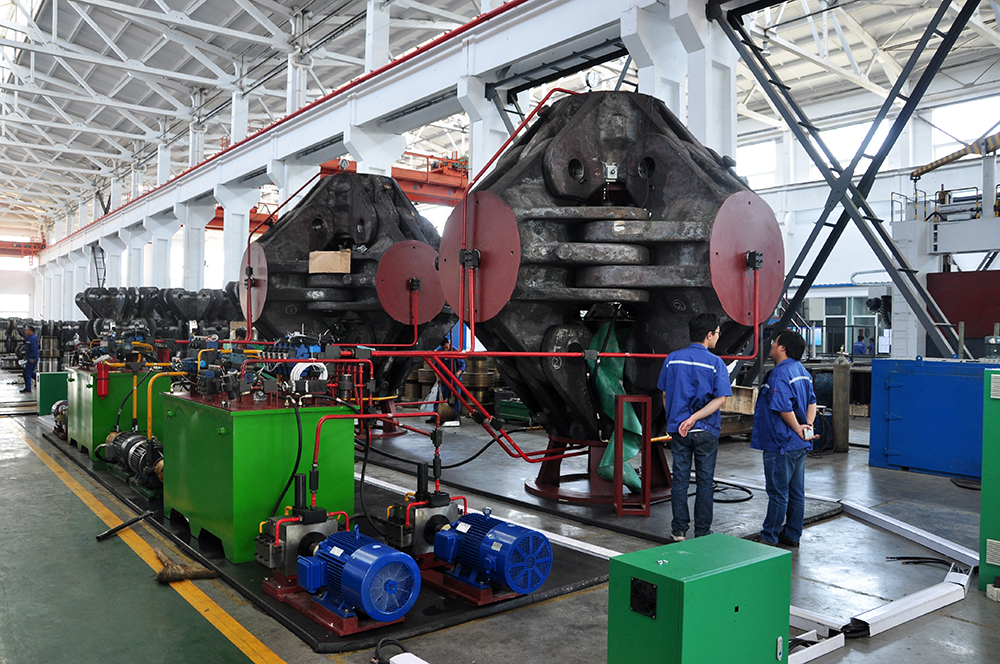
The application of pressure compensated variable pumps in HPHT Hydraulic Cubic Press machines primarily lies in their ability to meet the higher demands for pressure control and compensation in modern diamond synthesis processes, significantly enhancing production efficiency and product quality.Here is a detailed explanation of its application in HPHT Hydraulic Cubic Press machines: Replacing Traditional Pump Types and Adapting to Diversified Processes The HPHT Hydraulic Cubic Press machine has a history of over 40 years of development and application in China. For a long time, the hydraulic system of six-sided top hydraulic presses has consistently used SCY series axial piston pumps as the power source. However, SCY series axial piston pumps primarily provide a constant flow, resulting in a constant system pressurization speed. This step-wise curve is inconsistent with improved diamond synthesis processes. In recent years, with the improvement of synthesis technology and the diversification of HPHT Hydraulic Cubic Press machine applications, such as the synthesis of fine diamond particles, diamond composite sheets (PCD), cBN, etc., there is a need for a pressurization method that matches their growth curve. Pressure compensated variable pumps precisely meet this demand, becoming an effective way to replace SCY series axial piston pumps. Working Principle and Matching with Synthesis Process The unique aspect of the pressure compensated variable pump is that its output flow decreases as the working pressure increases, which is precisely what modern diamond synthesis processes require. The main body of the oil pump (refer to Figure 1 in source) is driven by a transmission shaft, causing the cylinder block to rotate. The plungers are pressed against the variable head (or swash plate) by a central spring. This causes the plungers to reciprocate as the cylinder block rotates, completing the oil suction and oil pressure actions. When the spring force is greater than the hydraulic thrust acting on the annular area at the lower end of the servo piston, the oil pushes the variable piston downwards, increasing the pump's flow. Conversely, when the oil pressure is greater than the spring force, the servo piston moves upwards, blocking the channel, causing the oil in the chamber to be unloaded. At this point, the variable piston moves up, the swash plate angle decreases, and thus the pump's flow decreases. This design ensures that the pump's outlet flow changes approximately according to a constant power curve within a certain range. Actual Application Effects and Advantages Provides a curve that matches new diamond synthesis processes: The pressure compensated variable pump can achieve a pressure curve that matches new diamond synthesis processes, ensuring that the synthesis process meets requirements. Improves work efficiency: During the piston's idle forward stroke and rapid return stroke, the pressure compensated variable pump operates in a no-load large flow output state, which accelerates the piston's speed during these two work steps. This overcomes the defect of constant oil supply by the original SCY series axial piston pump, reducing the piston's unnecessary travel time. According to calculations, in the same working time, using a pressure compensated variable pump results in two more pieces of diamond synthesized per shift on average compared to using an SCY series axial piston pump. Improves product quality: The quality of synthesized diamond is generally improved by 5% compared to when using SCY series axial piston pumps. Application Example (Φ500mm Press Machine) For example, when synthesizing Φ34.5mm cavity diamonds on a Φ500mm press machine, the pressurization ratio of the press's intensifier is 1∶7.7. The diamond synthesis parameters are set as: temperature delivery pressure 45MPa, first stop pressure 60MPa, and final pressure 75MPa. It is also required that the overpressure speed begins to slow down after the first stop pressure. Pump adjustment method: First, adjust the limit screw to the maximum position, then adjust the spring sleeve. When the system pressure is observed to be 7.8MPa, lock the spring sleeve. Then, screw the limit screw to the position where the final pressure is 75MPa and the system pressure is 12MPa. Through such adjustments, the pressurization speed during synthesis will operate according to the desired process curve (Figure 2 in source). Preparation and Precautions Before Use Noise issue: Besides misalignment of the coupling and motor, attention must be paid to the matching of the oil outlet pipe and connector body inner diameter with the oil pump flow. When the motor is unloaded, the oil output of the pressure compensated variable pump is at full flow. Therefore, the inner diameter of the oil outlet pipe and connector body must have sufficient space to accommodate the full flow of oil. Otherwise, an excessively small inner diameter will create fluid resistance, leading to severe vibration of the oil pipe and pump noise. Pump body overheating issue: If an excessively small connector body or oil outlet pipe inner diameter causes a large amount of lubricating oil from the pump's swash plate to be trapped in the oil chamber instead of being discharged from the drain port, it will lead to pump body overheating. Serious consequences include increased oil temperature, affecting the sealing effect of the main machine. Solution: Effective oil drainage is necessary. The screw plug at the bottom of the pump body can also be turned into an oil drainage channel through the connector body, thereby completely solving the pump overheating problem through multi-channel oil drainage.In summary, the pressure compensated variable pump, through its unique flow-pressure matching characteristics and efficient operating mode, greatly enhances the performance of HPHT Hydraulic Cubic Press machines in the synthesis of artificial diamonds and other superhard materials, holding significant value for promotion and application.
read more+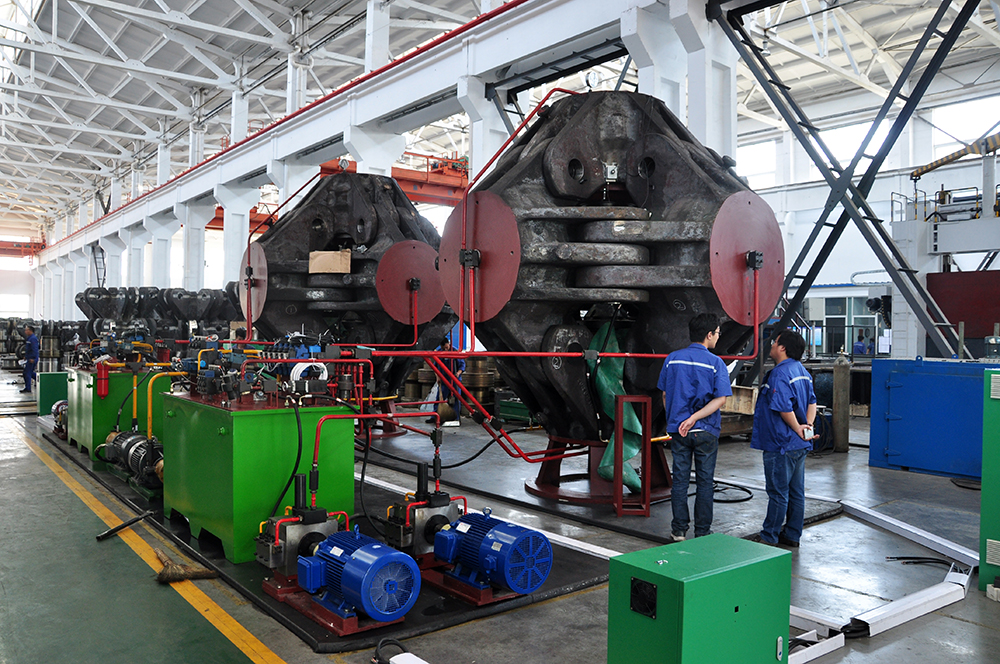
the energy-saving modification for the HPHT Hydraulic Cubic Press is mainly achieved by not starting the oil pump (motor) during the pressure intensifier depressurization stage. This increases the non-working time of the oil pump motor, thereby reducing energy consumption.Modification Rationale and PrinciplesProblem Statement: The HPHT Hydraulic Cubic Press operates continuously during the synthetic diamond production cycle, and its power source (oil pump motor) is in a continuous working state. With the trend towards larger equipment, motor power is typically 7.5kW, 11kW, or even higher, leading to alarming energy consumption, especially electricity. Therefore, reducing energy consumption, particularly electricity consumption, has become an urgent issue that needs to be addressed.Solution Approach: The entry point for the modification is to increase the non-working time of the oil pump motor to reduce its loss. After analyzing the working principles, structure, and synthetic process of the press, the decision was made to focus on "not starting the oil pump (motor) during the pressure intensifier depressurization".Problem with the Old System: Before the modification, to depressurize the pressure intensifier, an oil pump had to be started to generate pressurized oil. This pressurized oil would pass through check valve 14 and solenoid valve 48, eventually pushing open pilot-operated check valve 22, placing it in an open state. Only then could the high-pressure oil return to the oil tank via one-way throttle valve 21, pilot-operated check valve 22, and solenoid valve 10, completing the pressure intensifier depressurization. This process required starting the oil pump motor as the power source and took about 30-60 seconds.Modification of the New System: The modified plan involves using the high-pressure oil retained in the pressure chamber after pressure-holding to replace the oil pump motor as the power source for depressurizing the pressure intensifier. The specific changes are as follows:When the work program proceeds to the pressure intensifier depressurization, the solenoid YV14 is energized.The high-pressure oil inside the intensifier cylinder is then used to open valve 21 through valve 19.The hydraulic oil from the intensifier cylinder then returns to the oil tank through valve 21, valve 48, and filter 16, thereby achieving depressurization of the pressure intensifier.Analysis of Benefits After ModificationEconomic Benefits:Modification Cost: The increase in cost for each modified hydraulic press is approximately 90 yuan.Electricity Savings Calculation: Using a 15-minute synthesis process as an example, the pressure intensifier depressurization time is calculated as 40 seconds. A single 6x1300 ton HPHT Hydraulic Cubic Press working 340 days a year can save approximately 3989.33 kilowatt-hours of electricity annually.Electricity Bill Savings: Based on an average electricity price of 0.60 yuan/kWh, the annual electricity cost savings for one modified press is about 2393.6 yuan. If a medium-sized factory with 50 large-tonnage HPHT Hydraulic Cubic Presses (assuming 11kW motor power) adopts this modification, the annual electricity savings alone could amount to 119,680 yuan. The economic benefits are undoubtedly considerable.Environmental and Other Benefits:Noise and Vibration: Before the modification, the workshop was filled with the roaring sound of the oil pump motor starting and stopping, and the vibration of oil pipes and the hydraulic station door panel caused by it. After the modification, the workshop is noticeably "quieter," significantly reducing the noise and vibration generated during the depressurization process.Equipment Lifespan and Maintenance: The modification reduces the number of daily starts of the oil pump motor, which helps to extend its service life. It also greatly mitigates issues such as loose connections and oil leaks that can result from long-term pipe vibration, thereby reducing potential maintenance costs.Working Environment: The equipment modification also significantly improved the working environment for the staff.The modification to the HPHT Hydraulic Cubic Press, which enables depressurization without starting the oil pump (motor), is a technical upgrade that is low in investment, quick to show results, and highly effective. For manufacturers of the presses, this technology enhances the overall technical content and increases the added value of the product. For users of the presses, the greatest benefits are energy savings, reduced consumption, and an improved working environment.
read more+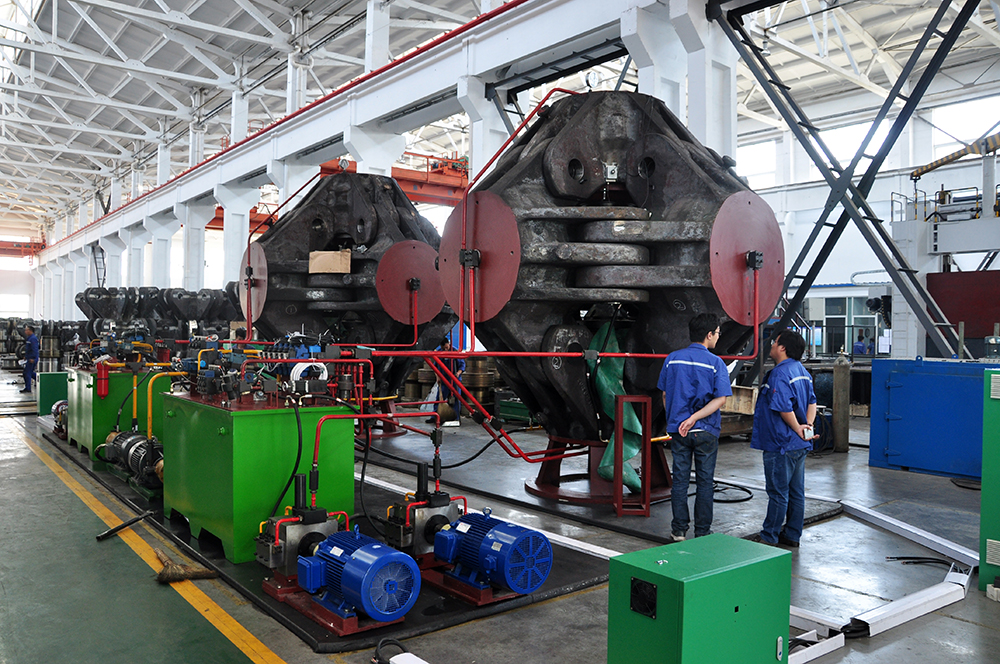
Servo control technology, by constructing a closed-loop servo control system, enables precise control of the ultra-high pressure relief process in cubic presses, overcoming issues such as discontinuous pressure relief and poor linearity found in traditional control methods (e.g., solenoid valve on-off control, stepping motor control). This addresses the higher demands for equipment performance and synthesis stability in high-performance super-hard material synthesis.Core Control Principle: Dynamic and precise control of the gap between the conical valve core and the valve seat.The ultra-high pressure relief valve of a cubic press primarily consists of a servo motor, relief valve body, conical valve core, conical valve seat, ultra-high pressure oil inlet, and low-pressure oil outlet. The most critical components are the conical valve core and the valve seat.The fundamental way to control the pressure relief speed is by controlling the size of the gap between the conical valve core and the valve seat: a larger gap results in faster pressure relief, and vice versa.However, in practical applications, the relationship between pressure relief speed and the gap is not a fixed linear one. As pressure decreases, a larger gap is required to maintain the pressure relief speed. Therefore, dynamically and precisely controlling this gap is the key technology.Servo control technology innovatively uses a servo motor to replace the stepping motor to drive the ultra-high pressure relief valve mechanism. A servo motor is a high-precision executive component. When configured with servo control technology, it can convert voltage signals into angular displacement or angular velocity output on the motor shaft, thereby precisely adjusting torque or speed to achieve accurate control of speed and position parameters. Advantages of servo motors compared to stepping motors include: Constant torque output, where the output torque is largely unaffected by the pressure relief speed, solving the problem of stepping motors where output torque is inversely proportional to speed, often leading to valve core jamming. Much better high-speed response performance than stepping motors. Closed-loop control with high precision, ensuring accurate valve reset. This avoids the disadvantage of stepping motors' open-loop control, which is prone to losing steps. The servo controller drives the servo motor to rotate, dynamically and precisely adjusting the opening gap between the conical valve core and the valve seat, meeting the requirements for smooth and linear ultra-high pressure relief. Its adjustable torque characteristic allows setting different torque values for closing and opening the relief valve, ensuring safe closing and timely opening. Its fast response capability can quickly reset the valve core in case of abnormal pressure relief, preventing accidents caused by sudden pressure drops.Construction of a Closed-Loop Servo Control System. The system consists of a Programmable Logic Controller (PLC), a servo control system (including a servo motor and servo drive), and a high-precision pressure sensor. An OMRON CP1H series PLC (CP1H-XA40DT-D) and a Siemens V90 servo control system (servo motor 1FL6042-1AC61-0AB1, servo drive 6SL3210-5FE10-4UA0) are used. Hardware Design: The PLC acts as the lower machine, collecting data from the pressure sensor and uploading it in real-time to the human-machine interface (HMI), which consists of an industrial computer and a display. The HMI converts pressure data into production pressure curves to monitor the pressure relief process in real-time. The servo controller is selected for position control mode, providing precise pulses. Communication between the HMI and the PLC uses the RS485 communication protocol. Software Design: An intelligent PID control algorithm is introduced. This algorithm library combines theoretical design with experimental data to establish a safe pressure relief algorithm that relates pressure relief speed to control parameters.Control Implementation Process. During the pressure relief phase, the PID control software automatically matches empirical pressure relief control parameters from the algorithm library based on the process-set pressure relief speed (SV(t)), ensuring safe initiation of the pressure relief process. The PID control software continuously calculates the measured pressure relief speed (PV(t)) and compares it with SV(t). If a deviation exists, the PID control software automatically adjusts the pressure relief control parameters based on the trend and deviation of PV(t), and outputs control pulses to the servo controller, driving the servo motor to open the pressure relief valve mechanism. It also records the pulse amount, thereby achieving closed-loop control and linear pressure relief. For different super-hard material synthesis processes (e.g., significant differences in pressure control, frequent changes in pressure relief speed, uncertainty in pressure relief parameters), the intelligent pressure control software can solve these problems without manual intervention. Full-process segmented pressure relief and inflection point handling: When synthesizing similar super-hard materials, the pressure relief speed varies across different pressure segments, typically divided into 2-3 segments of slow, medium, or fast pressure relief curves. The software includes an inflection point judgment program. When an inflection point is encountered, it recalculates the process pressure relief speed and adjusts control parameters in a timely manner, achieving a smooth transition of the pressure relief process curve and preventing instability or accidents. Pressure relief to return stroke determination and valve reset: When the pressure is relieved to the process-set safe return pressure (usually below 5 MPa), the system stops pressure relief, and the cubic press switches to the fast return stroke process. To ensure continuous production and execution of the next process, the ultra-high pressure relief valve must close. The software records the output pulse amount during pressure relief. When switching from pressure relief to return stroke, it controls the servo motor to reverse, outputting the recorded pulse amount to the servo controller to achieve precise reset of the ultra-high pressure relief valve. This prevents valve core jamming or failure to open again, creating conditions for precise control in the next ultra-high pressure servo relief process.Actual Application Results. The servo control system has successfully undergone trial acceptance on DZ1000 and DZ800 forging cubic presses. Test results show that during the process of ultra-high pressure relief from 100 MPa to a safe pressure of 3 MPa, the coincidence rate between the actual pressure relief speed curve and the process pressure relief speed curve reached over 95%, achieving smooth, linear, safe, and precise control of ultra-high pressure relief. In terms of pressure relief speed, servo control technology can achieve linear control in a wide range of 0.01~0.5 MPa/s, which is particularly suitable for the slow pressure relief processes required for high-end super-hard material synthesis. Although the application cost of servo control technology increased by 20% compared to stepping motors, its performance improved by more than double. It is also safer and more reliable, facilitating the synthesis of high-performance super-hard materials.
read more+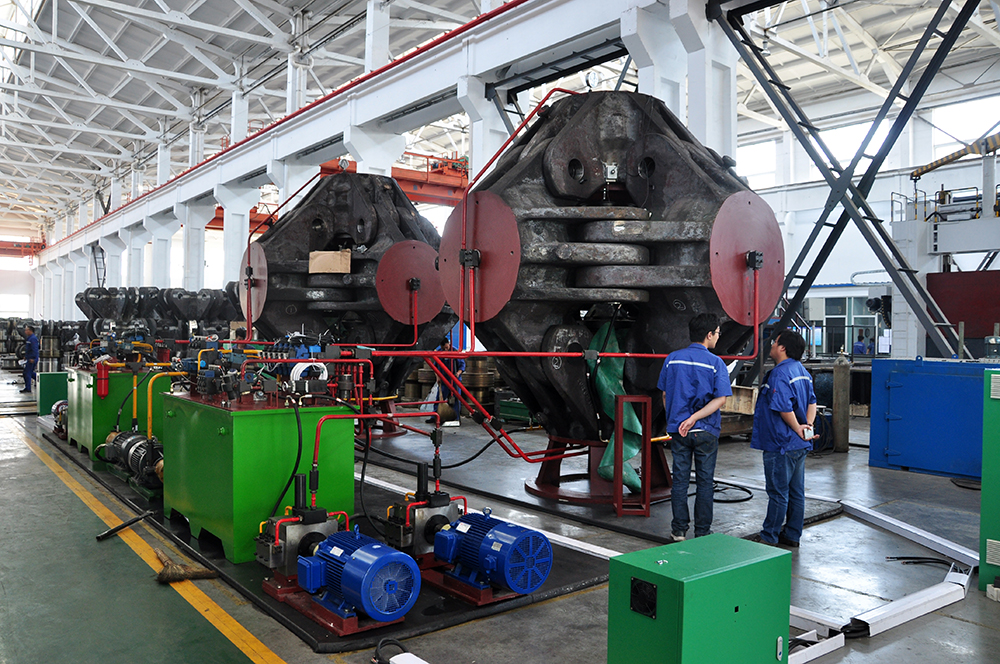
Improving the stability of a HPHT Hydraulic Cubic Press is crucial for ensuring the efficient and reliable operation of the equipment, especially since the HPHT Hydraulic Cubic Press is a high-tech device for synthesizing artificial diamond, requiring high precision and operational sensitivity. Below is a detailed explanation of how to improve the stability of a HPHT Hydraulic Cubic Press:1、Improvement of the Valve Plate Return Oil System Problem Description: When the press is in operation, the system is under high pressure (13-15 Mpa, which can reach 87-89 Mpa after boosting) and high temperature. After synthesis, during depressurization, the 10-liter variable plunger pump needs to be frequently started to achieve depressurization. Due to the high pressure and frequent starting, the press becomes unstable, noisy, and various oil pipes vibrate violently, especially the booster return oil pipe, which frequently breaks, leading to oil spray accidents. Furthermore, the loud noise makes it difficult to hear hammer cracking sounds, shortens the service life of the plunger pump, increases maintenance time and production costs, and raises power consumption. Improvement Measures: A powerless unloading electromagnetic ball valve was added to the valve plate return oil system. This type of ball valve has good sealing performance, is not affected by hydraulic locking, is less affected by hydraulic forces, requires small thrust for commutation and reset, and is suitable for high pressure. The electromagnetic ball valve is installed at the hydraulic control one-way valve in the valve plate return oil circuit. Through electrical control, the plunger pump is shut off during charging, overpressure, and fast return, and the high-pressure automatic depressurization is controlled by the electromagnetic ball valve. When the pressure is relieved to 3-4 Mpa, the plunger pump automatically starts until depressurization is completed. Improvement Effects: Equipment stability has improved. Oil pipe vibration is reduced, return oil pipe joints no longer break, reducing accidents and increasing uptime. Noise is significantly reduced. This provides favorable conditions for accurately judging abnormal sounds and reduces human-caused hammer breakage and explosion accidents. The service life of the plunger pump is extended. It can now be used for one year instead of six months, saving costs. The number of plunger pump starts is reduced, and power consumption is lowered, saving costs.2、 Transformation of the Pump Group Problem Description: The 50-liter vane pump used by the equipment has a large flow rate (50 liters at 1000 rpm, actual up to 73.5 liters/minute), which is a significant difference from the 10-liter axial plunger pump (10 liters at 1000 rpm, actual maximum 14.4 liters/minute). This mismatch leads to frequent equipment failures, higher oil temperature, and easy wear of the axial plunger pump, often resulting in insufficient or slow pressure compensation. This causes the vane pump to intervene too quickly for pressure compensation, leading to equipment instability. The 50-liter vane pump has a large flow rate, but the valve plate return oil port is small (inner diameter about φ17mm). This results in poor oil return, excessively fast oil flow, which causes the hydraulic oil to heat up easily. High oil temperature can lead to internal and external leaks, frequent pressure compensation, and fast wear of valves, thus causing equipment instability. The large flow rate of the 50-liter vane pump creates a significant impact on the electromagnetic relief valve (valve core bore φ10mm). The valve core has high usage frequency and wears out quickly, leading to frequent damage, repair, and replacement of the relief valve, resulting in more downtime. This is also a factor contributing to equipment instability and high noise. Improvement Measures: The 50-liter vane pump was replaced with a 32-liter adjustable axial plunger pump. This pump controls plunger operation via a swash plate, resulting in lower noise than quantitative vane pumps, easier maintenance and parts replacement. Its flow can be adjusted according to actual use, reducing impact on the relief valve and extending its service life. The 10-liter axial plunger pump was replaced with a 16-liter variable axial plunger pump. This change resolved the issues of insufficient or slow pressure compensation, improving equipment stability, shortening plunger pump start-up time, and reducing noise. An additional return oil pipe with an inner diameter of φ14mm was added to the valve plate return oil circuit. Improvement Effects: The oil temperature significantly decreased, and the return pressure can be better controlled at 3-4 Mpa, which plays a crucial role in improving equipment stability.3、Optimization of Hydraulic Oil Management Importance: Hydraulic oil is a key component for improving equipment stability. Improvement Measures: The 46# oil used at the initial stage of factory construction was replaced with 68# anti-wear hydraulic oil. Hydraulic oil is filtered every 4 months to address oil contamination issues. The hydraulic system employs methods such as suction oil filtration, high-pressure oil filtration, and return oil filtration to ensure the cleanliness of the hydraulic oil. An oil cooler is used for forced cooling of the hydraulic oil in the oil tank to reduce oil temperature. Improvement Effects: These measures provide assurance for the reliable operation of the hydraulic system and contribute significantly to ensuring equipment stability.4、Modification of the Electrical Control System Improvement Measures: Several programs were added to enhance safety and stability: "No block loaded" protection to prevent hammer extrusion. Slow rise of hammer head voltage protection to reduce hammer burning. "Previous block curve" display added to the screen, facilitating comparison with the previous block by synthesis operators during operation to prevent accidents. Improvement Effects: Through these improvements, the equipment's stability has significantly increased, and noise has been reduced. This provides a quiet and comfortable working environment for synthesis operators, allowing them to accurately identify abnormal sounds and reduce hammer breakage and explosion accidents.5、Improvement of Main Machine Installation and Overhaul Accuracy Importance: The installation and overhaul accuracy of the press's main machine components are another important factor affecting equipment stability. Problem Description: The press main machine consists of 6 sets of hinge beams connected by 12 pins. There are many fit clearances, and improper selection of dimensional tolerances can cause the pressure cylinder to "bow". During high-pressure operation, the hinge beams expand in six directions. If the fit between a pin and its hole is improper in a certain direction, that direction will expand more, causing the force direction to shift, leading to deformation of the synthesized block and easy occurrence of hammer cracking accidents. Improvement Measures: During cylinder removal, key dimensions are measured to select appropriate fit tolerances. Ensure that the fit tolerance between the pin and the pinhole is within the specified range. Grinding of damaged pinholes must be carefully managed; large-area grinding must be avoided to ensure the surface roughness of the hole. The fit between the piston and the working cylinder, and between the piston and the guide sleeve, must strictly adhere to the required tolerances. Dimensions of all removed workpieces must be measured, and those out of tolerance should be re-selected or replaced. The outer surface of the workpieces must be polished to prevent damage to sealing components.Through the comprehensive management and improvement of the HPHT Hydraulic Cubic Press as described above, equipment stability has been significantly enhanced, and uptime has increased, ensuring the completion of production tasks. Concurrently, various costs have been reduced, accidents have decreased, and hard hammer consumption and maintenance costs have been greatly lowered.
read more+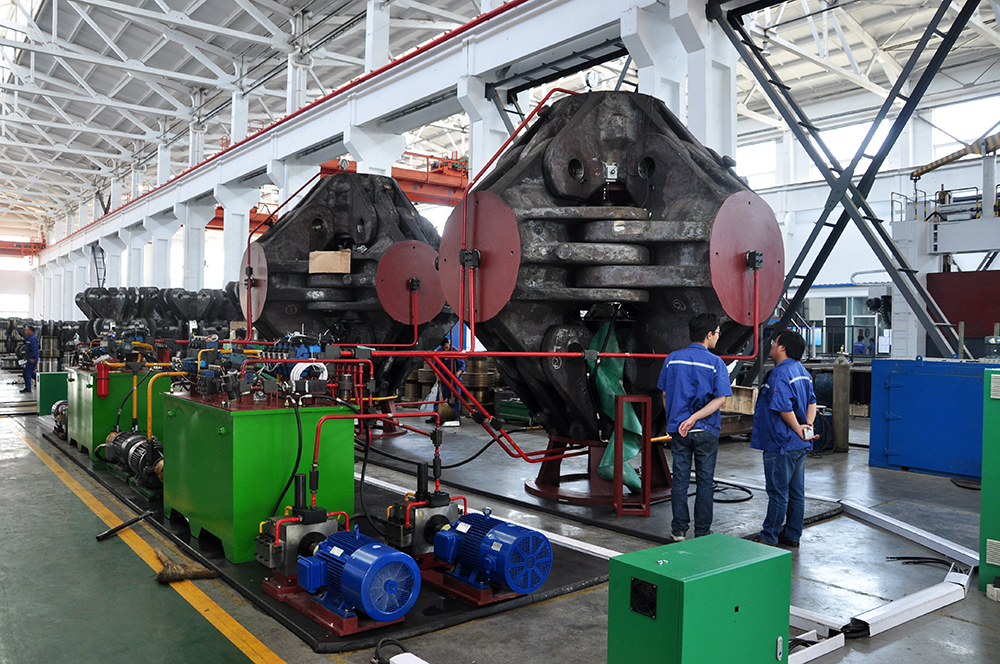
The cooling water temperature control system for the HPHT Hydraulic Cubic Press aims to control the outlet temperature of the cooling water precisely, thereby indirectly achieving effective control over the hammer head temperature during the diamond synthesis process, which in turn improves the quality of diamond synthesis and extends the service life of the top hammer.Below is a detailed explanation of the system's principle for controlling cooling water temperature:1、Control Objective and Challenges: The HPHT Hydraulic Cubic Press is a key equipment for producing artificial diamonds, and the hammer head temperature directly affects the quality of diamond synthesis and the lifespan of the top hammer. Since the hammer head temperature is not convenient to measure and control directly, the method of controlling the cooling water outlet temperature flowing through the hammer chamber is generally adopted to indirectly control the hammer head temperature. Traditionally, manual and rough adjustment of the water outflow rate makes it difficult to respond to changes in water and hammer temperature during the synthesis process. This can lead to decreased diamond synthesis quality and even increase the risk of production accidents like "hammer cracking" or "explosion". The cooling water temperature control system addresses the shortcomings of manual adjustment by precisely controlling the cooling water outlet temperature to achieve hammer temperature control during diamond synthesis. The challenges faced by this cooling water temperature control system include its inherent lag, time-varying, and non-linear characteristics.2、System Composition and Basic Principle: The automatic water temperature control system consists of six completely independent and identical subsystems. Each subsystem is responsible for controlling the temperature of one cooling water circuit. Each subsystem primarily comprises a controller, a stepper motor, and a flow control valve. The core of the control process is: the upper computer sets a desired cooling water outlet temperature value. The controller real-time acquires the actual cooling water outlet temperature. By comparing the actual temperature with the set temperature, the controller calculates the temperature deviation and its rate of change. Based on this deviation information, the system utilizes a multi-mode PID algorithm to determine the precise displacement the stepper motor needs to adjust. Upon receiving the displacement command, the stepper motor precisely adjusts the opening of the connected flow control valve. When a high cooling water outlet temperature is detected, the controller instructs the flow control valve to increase its opening, thereby increasing the cooling water flow, taking away more heat, and lowering the outlet temperature. Conversely, when the outlet temperature is too low, the controller instructs the flow control valve to decrease its opening, reducing the cooling water flow, and raising the outlet temperature.3、 Core Hardware Implementation: Temperature Measurement: The system uses a DS18B20 single-wire digital temperature sensor to measure the cooling water outlet temperature. This sensor offers a wide measurement range (-55℃ to +125℃), high resolution (0.0625℃), long transmission distance, and strong anti-interference capability, making it suitable for harsh on-site environments. To further reduce interference, twisted-pair shielded cables are used for the measurement signal lines, and a median-average filtering method is employed in the software, which involves sampling temperature values multiple times, removing the maximum and minimum values, and then calculating the average to improve measurement accuracy. Control Core: The entire water temperature controller uses an STM32 microcontroller as its core processor. Communication Circuit: The controller communicates with the upper computer via an RS485 bus, following the MODBUS protocol in RTU mode, ensuring reliable data transmission between the upper and lower computers through a master-slave response mechanism. To enhance system reliability, the RS485 system is optically isolated from the microcontroller, and protection circuits are added to the communication lines to prevent surge currents from damaging the chips. Each subsystem has an independent communication address. Stepper Motor Drive: The precise adjustment of the flow control valve's opening relies on the accurate movement of the stepper motor. The system incorporates an independent stepper motor drive circuit, with LV8727 as the core drive chip. LV8727 is a PWM current-controlled micro-stepping motor drive chip that supports various micro-stepping options, fast decay, slow decay, and mixed decay modes, and includes built-in temperature and overcurrent protection. The controller generates PWM waves with specific duty cycles, which are then filtered to produce a control voltage (Vref). This control voltage precisely determines the stepper motor's drive current, ensuring that its driving torque meets the requirements for the flow adjustment valve in its opening, closing, and regulating states.4、Key Control Algorithms: Stepper Motor Acceleration/Deceleration Algorithm: To ensure the stepper motor's speed, precision, and stability, and to prevent lost steps and overshoot, the system employs a uniform acceleration/deceleration algorithm. This algorithm divides the stepper motor's displacement adjustment process into three phases: uniform acceleration, uniform velocity, and uniform deceleration. The program calculates the number of steps for uniform acceleration, uniform velocity, and uniform deceleration based on given parameters such as initial speed, initial acceleration, target speed, and deceleration. By discretizing the acceleration and deceleration processes and calculating the pulse time for each step, the system achieves ideal control of the stepper motor, allowing the flow adjustment valve to quickly and smoothly reach the calculated opening position. Cooling Water Temperature Control Algorithm (Multi-Mode PID): Addressing the inherent characteristics of large lag, time-varying, and non-linearity in the water temperature control system, the system utilizes a multi-mode PID control combined with conventional incremental PID single-mode control. Control Mode Switching: When the temperature deviation is less than a preset value, the system uses a conventional incremental PID algorithm, which achieves good control performance. Large Deviation Handling: When the temperature deviation is large, the system automatically switches to multi-mode PID control. Mode Division: Multi-mode PID categorizes the control process into three modes—acceleration control, deceleration control, and steady-state control—by evaluating characteristic variables such as temperature deviation (e), its first derivative (ė), and second derivative (ë). PID Parameters in Different Modes: During the acceleration control phase (energy storage process), primarily proportional action is used for fast response (Ki=0, Kd=0). In the deceleration control phase, integral and differential actions are mainly employed to suppress overshoot (Kp=0). In the steady-state control phase, primarily integral control is used to eliminate steady-state error (Kp=0, Kd=0). By applying different combinations of PID parameters in different control modes, the multi-mode PID algorithm effectively suppresses overshoot in systems with large lag and achieves steady-state with the shortest possible regulation time, enabling the system to adjust to the target temperature smoothly, quickly, and accurately.5、System Performance: Experimental results show that the system can control the outlet temperature of each cooling water circuit to within ±2℃ of the set value from the upper computer. The system's maximum overshoot is only 2.5%. The system can complete an adjustment from one temperature state to another within 18 seconds. This fully meets the stringent requirements of the diamond synthesis process for outlet water temperature, enabling intelligent control of diamond cooling water, significantly reducing the possibility of production accidents, decreasing the labor intensity for operators, and greatly improving the quality of diamond production.
read more+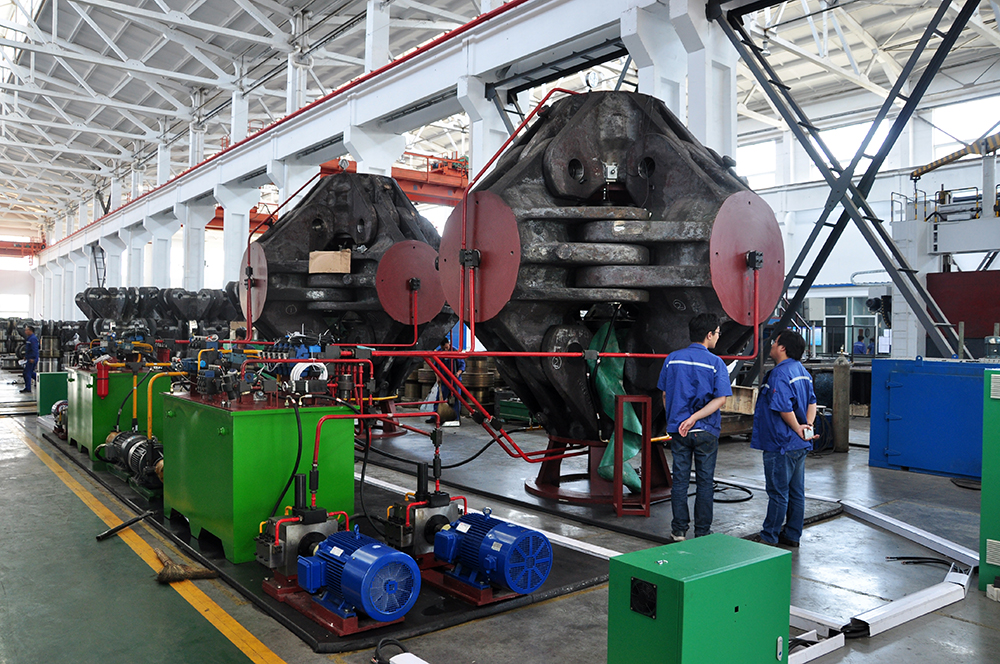
To enhance the control precision of a HPHT Hydraulic Cubic Press during the synchronous filling process, improvements can be made in several areas, including measurement technology, feedback control, intelligent algorithms, and automation control.Here are the detailed improvement methods and ideas:Detailed Improvement Methods and IdeasHigh-Precision Detection of Six-Cylinder DisplacementAlthough displacement sensors have been used on six-sided anvil presses for nearly a decade, their primary application has been for rapid traverse control and non-critical system parameter measurement. They haven't been truly integrated into core high-pressure system control due to poor repeatability over large measurement ranges and a lack of application scenarios for small-range, high-precision detection.During the filling process, the piston stroke typically ranges from 3 mm to 5 mm. Within this measurement range, high-precision displacement sensors can effectively provide accurate measurements, offering a reliable basis for achieving displacement synchronization.High-Precision Pressure Sensors and Precise Pressure ControlCurrent filling control methods typically involve setting a fixed pump displacement, which rapidly fills the working cylinders with hydraulic oil. This often leads to uncontrolled pressure increases in the working cylinders during pyrophyllite compression, with actual filling pressures frequently exceeding the set value by more than 20%.During the filling process, synchronization is highly sensitive to pressure changes. Therefore, adopting high-precision pressure sensors with an accuracy of 0.01 MPa in the control system and precisely controlling the filling pressure rise rate are crucial for improving the synchronous filling control level.Proportional Valves Replacing Throttle Valves for Single-Cylinder Flow ControlCurrently, the unconnected filling method uses six manual throttle valves to adjust the flow rate for each cylinder, resulting in poor control precision, low automation, and weak anti-interference capability.By replacing throttle valves with electro-hydraulic proportional valves, online automatic adjustment of flow rates for each working cylinder can be achieved. This not only effectively overcomes problems such as poor precision, repeatability, and stability but also eliminates tedious manual adjustments, ensuring optimal filling synchronization for each synthetic block.Six-Cylinder Displacement Comparison and Correction AlgorithmBased on the technologies of using displacement sensors to collect piston displacement and replacing throttle valves with proportional valves, the displacement sensors can continuously feed piston displacement signals back to the control system during the filling process.The system can compare the displacement of all six working cylinders and promptly adjust any cylinder whose displacement falls outside the acceptable range, correcting its displacement to ensure synchronous movement of all six cylinders. This algorithm can effectively achieve automatic six-cylinder synchronous control.Hybrid Control Method Combining Pressure and DisplacementThe ultimate goal of synchronous filling control is to achieve synchronous movement of the top anvils. In practice, displacement changes are achieved by adjusting single-cylinder flow rates, and the fundamental reason for flow changes lies in pressure variations. Therefore, the synchronous filling process control of a six-sided anvil press is a comprehensive process that simultaneously controls pressure, flow, and displacement.Previous control methods often focused on only a single variable, such as pressure or flow, leading to suboptimal control results. The correct approach is to leverage the computational capabilities of the electronic control system to dynamically distribute the flow rate to each working cylinder while ensuring a stable increase in filling pressure, thereby achieving precise synchronous control of all six-cylinder displacements and effectively improving filling synchronization.The technical value of improving filling synchronous control precision is reflected in the following aspects:Improved High-Pressure Seal Stability: Enhanced synchronous filling control technology can effectively improve the uniformity of pyrophyllite compression during the filling stage, leading to a more symmetrical seal edge formation. This significantly improves the high-pressure sealing performance of the synthetic blocks, reduces the likelihood of "explosions," enhances safety, and lowers production costs.Improved Uniformity of Pressure Gradient Field: Improved synchronous filling control technology helps stabilize the internal pressure gradient field of the synthetic blocks. This is particularly beneficial for producing large-sized products with large synthetic blocks, as it can maximize the utilization rate of the high-pressure cavity volume and increase product output.Improved Repeatability of Side-Heated Carbon Tube Resistance: Poor filling synchronization can lead to random degrees of cracking or breakage of heating carbon tubes during the filling process. These damages create contact resistance, resulting in non-uniform temperature field distribution, which in turn affects the quality stability of high-end products (such as high-grade composite sheets). By improving synchronous filling control technology, the random damage to heating carbon tubes can be minimized, effectively improving the repeatability of resistance distribution and thus enhancing the quality of high-end products, providing technical assurance for domestic product manufacturers.
read more+
The application and development of HPHT Hydraulic Cubic Press in China have a history of over 40 years. For a long time, single-acting intensifiers or ultra-high pressure pumps have been adopted as the intensification devices. Domestic single-acting intensifier technology is very mature and widely used by most press manufacturers. However, due to their disadvantages such as large volume, high cost, and stroke limitations, they are increasingly unable to meet the requirements of large-scale development and long-process pressure holding for HPHT Hydraulic Cubic Press. Although ultra-high pressure pumps offer the advantage of long-term intensification and pressure holding, their short service life, frequent replacement, and high installed power in practical industrial applications have limited their widespread promotion. In recent years, the developed double-acting reciprocating intensifier, capable of automatic continuous intensification, possesses unparalleled advantages over single-acting intensifiers and ultra-high pressure pumps, and has been widely promoted and applied domestically.1. Working Principle of Double-acting Reciprocating IntensifierA single-acting intensifier, driven by low-pressure oil, can only intensify during a single stroke, with the return stroke being a non-working state. The intensification time is limited by the stroke, thus preventing long-duration intensification. In contrast, a double-acting reciprocating intensifier, driven by low-pressure oil, can intensify during both strokes. As long as there is low-pressure oil driving it, it can intensify continuously. Figure 1illustrates the schematic diagram of a double-acting reciprocating intensifier. It is mainly composed of an intensifier cylinder, an automatic reversing valve, and four ultra-high pressure check valves.The automatic reversing valve (a two-position four-way valve) controls the reciprocating motion of the intensifier cylinder. When the lower position of the automatic reversing valve is connected to the system, oil from the oil source enters the large chamber on the upper side of the intensifier cylinder via port P, and flows into the small chamber on the upper side of the intensifier cylinder via check valve I, generating a downward thrust. The effective action area is the cross-sectional area of the large chamber on the upper side of the intensifier cylinder. This force drives the piston downward.The automatic reversing valve is hydraulically driven to reverse. It utilizes the unequal effective areas of the control chamber's small piston and large piston, with the oil source pressure biasing the small piston, and the large piston controlling the pressure to be either zero or the oil source pressure. This mechanism controls the reciprocating motion of the automatic reversing valve spool, changing the working position of the automatic reversing valve. As shown in Figure 1, a control oil groove is opened in the middle of the intensifier cylinder piston. When the piston moves down to the lowest end, the oil source pressure communicates with the large piston of the automatic reversing valve through the control oil groove. Although the acting pressures on the large and small pistons are equal at this time, the acting area of the large piston is greater than that of the small piston, causing the automatic reversing valve to switch to the upper position, and the intensifier cylinder begins to move upward for intensification. When the piston moves up to the highest end, the large piston of the automatic reversing valve communicates with port T through the control oil groove. At this point, the force exerted by the small piston is greater than that by the large piston, causing the automatic reversing valve to switch to the lower end, and the intensifier cylinder begins to move downward for intensification... From this, it can be seen that as long as pressurized oil is continuously supplied, the intensifier will automatically reciprocate and continuously output the intensified liquid.Currently, double-acting reciprocating intensifiers have been successfully applied in Φ650mm cylinder diameter presses and Φ750mm cylinder diameter presses. The maximum working pressure can reach 120 MPa, and the pressure control accuracy can reach ±0.01 MPa. The intensification ratio is 7:1. The overpressure speed of the intensifier can be controlled by regulating the flow or pressure entering the intensifier.This hydraulic circuit uses two variable pumps as power sources. The oil circuit controlling the forward and reverse movements of the six cylinders is the same as the original oil circuit. The oil circuit controlling the intensifier consists of a proportional relief valve, an electro-hydraulic directional valve, and a safety valve. The two variable pumps are combined as a large displacement variable pump and a small displacement variable pump. During overpressure, the large pump is activated (or both pumps are activated simultaneously). The electro-hydraulic directional valve is energized, and the output flow to the double-acting reciprocating intensifier is adjusted by closed-loop control of the large pump motor speed via a frequency converter. This in turn controls the overpressure speed. Alternatively, the overpressure speed can be controlled by closed-loop control through a proportional relief valve. When overpressure is complete, the electro-hydraulic directional valve is de-energized, and the double-acting reciprocating intensifier stops working. During pressure compensation, the small pump is activated, the electro-hydraulic directional valve is energized, and pressure compensation accuracy is controlled by the proportional relief valve. When pressure compensation is complete, the electro-hydraulic directional valve is de-energized, and the intensifier stops working. A safety valve is set in the circuit to ensure that the intensifier does not exceed the equipment's safe pressure in case of electrical component failure. Pressure relief can be achieved directly from high pressure using the same relief valve as an ultra-high pressure pump.Advantages of Double-acting Reciprocating Intensifier in Cubic Press Applications As a new intensification device, the double-acting reciprocating intensifier offers unparalleled advantages over single-acting intensifiers and ultra-high pressure pumps in cubic press applications. These advantages are specifically reflected in the following aspects:(1) Small size, light weight, low cost. The currently applied double-acting reciprocating intensifier weighs only 85kg and has dimensions of 775×150×205 (mm). Compared to single-acting intensifiers and ultra-high pressure pumps, its manufacturing cost is lower.(2) Unrestricted overpressure time. As long as the low-pressure oil source is continuous, the double-acting reciprocating intensifier can continuously intensify, meeting the requirements for long-duration overpressure.(3) Simple hydraulic circuit and control. Driven by low-pressure oil, it provides automatic continuous intensification. Control over the double-acting reciprocating intensifier's start, stop, and intensification speed can be achieved by controlling low-pressure hydraulic components, without the need for other auxiliary electronic components and ultra-high pressure hydraulic components.(4) Low noise. The movement of the double-acting reciprocating intensifier is plunger-type sliding, with no rigid mechanical connections. This results in lower noise compared to ultra-high pressure pumps.(5) Low installed power. Only two variable piston pumps are required to complete the overpressure and pressure compensation control for the double-acting reciprocating intensifier.
read more+The intersection of Jingjin Road and Wei Yi Road, Luoxin Park, Economic and Technological Development Zone, Xin'an County, Luoyang City, Henan Province, China
+86 0379-6068-6876 |